
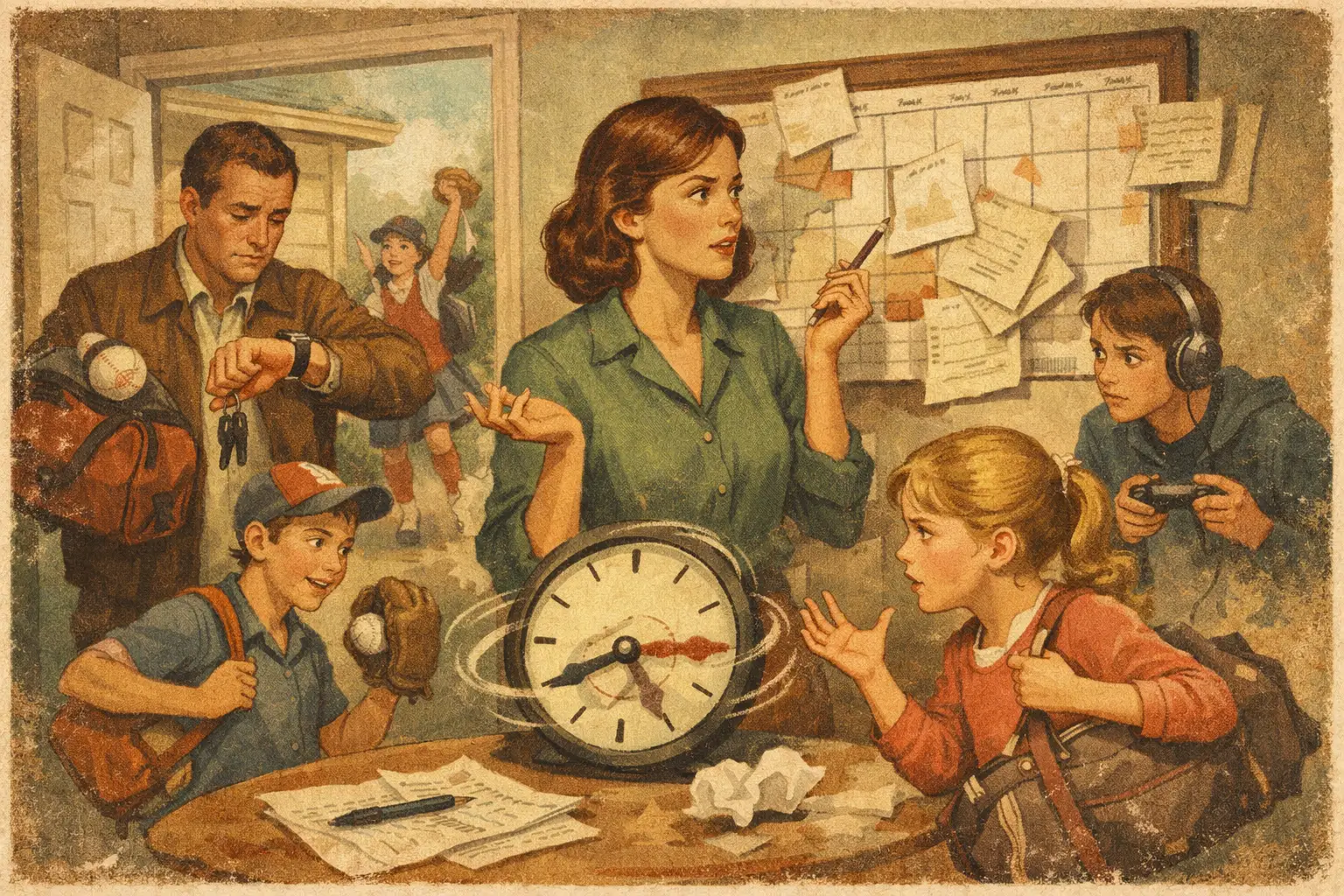
A school concert is on the same evening as soccer practice. A work meeting runs into a dentist appointment. One parent assumed the other could handle pickup, while a caregiver had already committed to something else. Knowing how to solve family schedule conflicts starts with recognizing that these problems are rarely caused by a single busy day. They usually come from missing information, unclear ownership, or decisions that were never made together.
The goal is not to pack every hour perfectly. Family life changes too quickly for that. The goal is to create a reliable way to see commitments early, decide what takes priority, and adjust without turning every conflict into a last-minute emergency.
How to Solve Family Schedule Conflicts With One Shared View
A family cannot coordinate from separate sources of information. If school emails, team messages, personal calendars, text threads, and paper notes all hold part of the plan, someone will miss a detail. Even a well-intended reminder can get buried under work messages or arrive after another commitment has been made.
Start by putting every fixed commitment into one shared schedule as soon as it is known. Include school events, practices, games, medical appointments, work travel, recurring pickups, childcare coverage, and family obligations. Give each event a clear name, start and end time, location, and the person responsible for it.
This shared view should be available to every adult who helps manage the household. Older children can also benefit from viewing the schedule, especially when they are responsible for getting ready, packing equipment, or arranging transportation. Visibility does not mean every person needs equal editing access. It means everyone can see the plan that affects them.
A centralized system such as SynclyOne can help keep family, school, and team commitments in the same operational view. The useful part is not simply having another calendar. It is reducing the number of places people have to check before they make a decision.
Set Priorities Before a Conflict Happens
Not every event carries the same weight. When two commitments overlap, the hardest part is often not finding a solution. It is deciding which obligation should move, who needs to be informed, and whether the choice is fair.
Create a few shared priority rules before the next conflict appears. For example, medical appointments and major school requirements may take priority over optional social plans. A child’s championship game may take priority over a routine practice, while a nonrefundable work trip may outweigh a flexible appointment. The right order depends on your household, but the decision criteria should not be invented under pressure.
It also helps to distinguish between fixed events and flexible events. A fixed event has little room to move, such as a school performance, a doctor’s appointment with a long wait time, or a mandatory meeting. A flexible event may be rescheduled, attended by another adult, shortened, or skipped without major consequences.
When a conflict occurs, ask three direct questions: What cannot move? Who is most affected by the decision? What is the least disruptive alternative? Those questions keep the discussion practical rather than personal.
Avoid the automatic sacrifice
Many households default to the same person whenever schedules collide. One parent always leaves work early. One caregiver handles every pickup. One child’s activity is treated as less important because it is easier to miss. That approach may solve individual conflicts, but it creates resentment and makes the family system less reliable over time.
Rotate the inconvenience when possible. If one person adjusted last week, look for a different solution this time. Fairness will not mean perfect equality in every situation, especially when jobs or custody arrangements have different constraints. It does mean recognizing patterns and discussing them openly.
Assign Ownership, Not Just Attendance
An event is not fully planned because it appears on a calendar. Someone still needs to handle the surrounding tasks: transportation, permission forms, uniforms, snacks, equipment, payments, pickup, and communication with coaches or teachers.
For commitments that require coordination, assign one clear owner. That person does not have to do every task, but they are responsible for confirming that the tasks have been covered. A soccer game, for example, may involve one adult driving, another packing water and cleats, and a child bringing a signed form. Without ownership, each person may assume someone else handled the details.
This is especially useful for recurring responsibilities. Decide who owns morning drop-off, after-school pickup, weekly meal planning, activity registration, and appointment scheduling. If the owner cannot complete the task, the responsibility should be reassigned explicitly, not left to assumption.
Clear ownership also prevents a common source of conflict: one person carrying the mental load while everyone else believes they are helping. Shared schedules work best when visibility is paired with shared responsibility.
Build a Short Weekly Planning Routine
You do not need a long family meeting with a detailed agenda. A 10- to 15-minute check-in once a week can prevent most avoidable conflicts.
Choose a consistent time, such as Sunday evening or Monday morning, and review the next seven to 14 days. Look for overlaps, transportation gaps, deadlines, and events that need preparation. Confirm who is responsible for each high-impact commitment, including anything that falls outside normal routines.
Use the conversation to catch the details that calendars cannot always show. A child may need to bring a project to school. A coach may have changed the practice location. A work event may be optional, but attendance could matter. A grandparent may be available to help with pickup on a specific day. These details are often what turn a manageable week into a scramble when they are not discussed.
The routine should end with decisions, not just awareness. If Thursday has a conflict, decide by the end of the check-in who is driving, what is being rescheduled, and who will notify the affected people.
Use Real-Time Updates, Not Memory
A shared plan only works when it reflects reality. If practice is canceled, an appointment changes, or a meeting runs late, update the schedule immediately and notify the people affected. Do not rely on remembering to mention it at dinner or assuming the other person saw the text message.
For urgent changes, use a direct alert in addition to updating the calendar. A calendar update handles the record. A direct message handles the immediate attention needed for a same-day change. Both matter when someone is already driving, working, or preparing for an event.
Be specific in updates. “Practice moved to 6:30 p.m. at East Field. I can take Jordan, but I need someone to cover Ava’s pickup at 5:45 p.m.” is far more useful than “Practice changed.” It identifies the impact and makes it easier for another person to respond.
Leave room for transition time
Many schedule conflicts are not true overlaps. They are impossible transitions. A meeting ending at 5:00 p.m. and a pickup beginning at 5:00 p.m. may look fine on paper, but travel time, parking, handoffs, and delays make the plan unrealistic.
Add buffers around high-stakes commitments. A 15-minute buffer may be enough for nearby events, while medical visits, airport trips, performances, and school dismissal may need more. The amount depends on your location and routine, but the principle is simple: schedule the travel and preparation time, not just the event itself.
Have Backup Plans for the Busiest Days
Backup plans are not a sign that your schedule is failing. They are a practical response to the fact that traffic, sick children, work demands, weather, and changed plans happen.
Identify trusted backup options before you need them. This could include a co-parent, relative, neighbor, carpool partner, babysitter, or another team parent. Be clear about what they can reasonably help with and avoid treating their availability as automatic. A backup person needs enough notice, accurate event details, and a simple way to confirm the plan.
For recurring problem areas, create a standing alternative. If Wednesday pickup is consistently difficult, a regular carpool or after-school option may be better than solving the same conflict every week. Repeated friction is useful information. It often means the routine needs to change, not just be managed more carefully.
Address the Pattern, Not Only the Emergency
When a conflict is resolved, take a minute to ask why it happened. Was an event entered late? Did a school email go unread? Was ownership unclear? Did the schedule leave no transition time? Did one person have information that never reached the rest of the household?
This is not about assigning blame. It is about improving the system. If the same issue happens repeatedly, add a simple safeguard: enter school dates on the day they arrive, require confirmation for transportation changes, review the next two weeks instead of one, or create a recurring reminder for registration deadlines.
The best family schedule is not the one with the most color-coded events. It is the one that helps people make clear decisions before a conflict becomes stressful. A shared view, realistic priorities, and a short weekly check-in give your household room to adapt while keeping everyone moving in the same direction.